
SEO and SEM Marketing: How to Grow Your Visibility in Search
When people need a product, service or answer, they often turn to a search engine. Search engine optimisation (SEO) and search engine marketing (SEM) help businesses appear in search results and reach those potential customers. Although the terms are sometimes used interchangeably, they describe different approaches to search visibility.
What is SEO?
SEO is the practice of improving a website so it is more likely to appear prominently in organic, unpaid search results. It involves understanding what people are searching for and making a site useful, accessible and easy for search engines to understand.
SEO commonly includes three areas:
- On-page SEO: Creating helpful content and using clear page titles, headings, internal links and descriptive URLs.
- Technical SEO: Improving factors such as site speed, mobile usability, indexing and structured site navigation.
- Off-page SEO: Building the site’s reputation through relevant links, mentions and other signals from across the web.
SEO is generally a long-term investment. Results can take time, but well-maintained pages may continue to attract relevant visitors without a fee being charged for every click.
What is SEM?
SEM stands for search engine marketing. The term is used in different ways: some people use it as an umbrella term for both paid and organic search activity, while others use it specifically to mean paid search advertising. In this article, SEM refers to paid search campaigns, such as adverts shown on search engine results pages.
With paid search, advertisers typically choose keywords, write adverts and set a budget. Depending on the advertising platform and campaign, they may pay when someone clicks an advert or when another defined action takes place. Advert placement is influenced by factors such as the bid, the advert’s relevance and the quality of the landing page.
SEO and SEM: the main differences
| Area | SEO | Paid search SEM |
|---|---|---|
| Placement | Organic search results | Sponsored search results |
| Cost | Does not usually involve a fee for each organic click, but requires time and resources | Requires an advertising budget, often with costs linked to clicks or campaign goals |
| Time to visibility | Usually gradual | Can begin soon after a campaign is approved and launched |
| Longevity | Strong rankings may continue to bring traffic, though they need ongoing attention | Visibility generally stops when the campaign pauses or its budget runs out |
Why combine SEO and SEM?
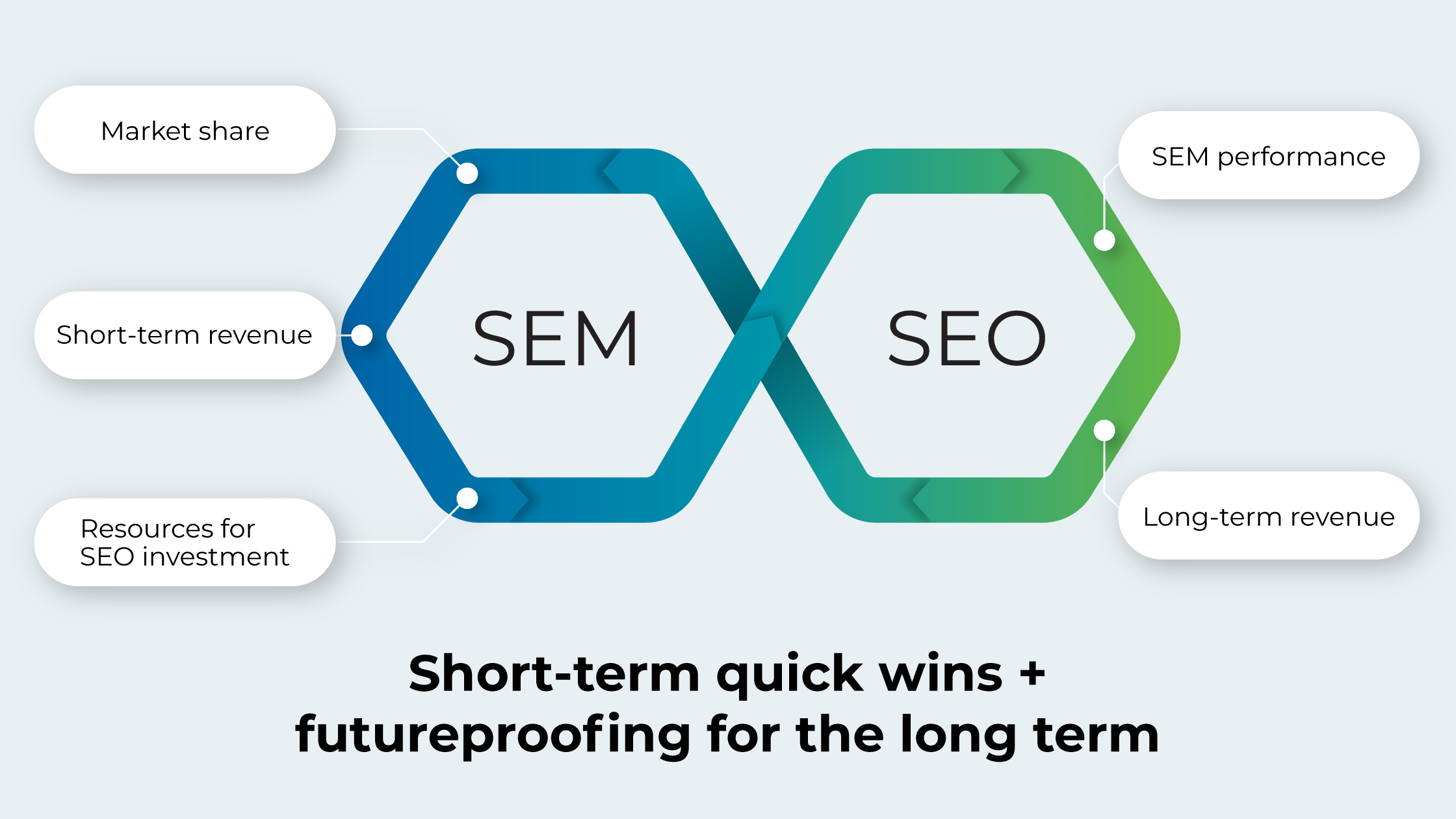
SEO and paid search can support the same marketing goals in different ways. Paid campaigns can provide visibility while organic content is being developed. SEO can build lasting discoverability, while paid search can help promote a specific offer, reach a defined audience or test demand for a search term.
Using both approaches can also provide useful insights. Search advertising data may reveal which keywords attract clicks or conversions. Those findings can inform content planning, while organic search data can highlight pages or topics that may be worth promoting with paid campaigns.
How to build a search marketing strategy
-
Set clear objectives.
Decide what search marketing should achieve, such as increasing relevant website visits, generating enquiries, making sales or raising awareness of a service.
-
Research your audience and keywords.
Find out how potential customers describe their needs. Consider the intent behind each search: someone looking for general information may need a guide, while someone comparing suppliers may be closer to making a decision.
-
Create useful landing pages.
Make sure each page answers the visitor’s query, explains the next step and works well on mobile devices. A relevant landing page can improve the experience for both organic visitors and paid-ad clicks.
-
Plan SEO and paid campaigns together.
Prioritise important topics for organic content and decide where paid promotion could complement it. Avoid sending every advert to the homepage when a more specific page would better match the search.
-
Measure performance and refine.
Review results regularly. Improve pages and campaigns based on what visitors do, not just on how many people see them.
Metrics to monitor
Useful measures depend on your objectives. For SEO, these may include organic impressions, clicks, rankings for relevant queries, engaged visits and conversions. For paid search, monitor impressions, click-through rate, cost per click, conversion rate and cost per conversion. In both cases, focus on the quality and value of the traffic rather than rankings or clicks alone.
Common mistakes to avoid
- Chasing traffic without considering intent: A high visitor count is not useful if the content does not meet the searcher’s needs.
- Expecting instant SEO results: Organic growth typically requires consistent work and time.
- Running paid adverts without a clear budget: Set spending limits and check campaign performance frequently.
- Ignoring the landing-page experience: Slow, confusing or irrelevant pages can waste both organic opportunities and advertising spend.
- Measuring success by rankings alone: Rankings are only one indicator. Leads, sales and other meaningful outcomes matter too.
Conclusion
SEO and SEM marketing can both help a business become more visible in search, but they work in different ways. SEO builds organic visibility over time, while paid search can provide targeted exposure through advertising. A considered strategy uses the right approach for each goal, gives searchers useful experiences and measures results against business outcomes.
SEO and SEM Marketing: 26 Frequently Asked Questions Answered for 2026
- What does SEO SEM means?
- What is SEO and SEM with examples?
- What is better SEO or SEM?
- What is difference between SEO and digital marketing?
- Why use SEO and SEM?
- Is SEO the same as SEM?
- Is Google ads SEM or SEO?
- Is SEO included in SEM?
- What is the similarity between SEM and SEO?
- What is the main difference between SEM and SEO?
- What is an example of SEM marketing?
- What are the 4 types of media marketing?
- Is SEO dead or evolving in 2026?
- Is Google Ads SEO or SEM?
- Why is SEO and SEM important?
- What is SEO vs SEM for small business?
- What is SEO SEM full form?
- What is SEO vs SEM for dummies?
- Which is paid, SEO or SEM?
- How do SEO and SEM work together?
- What is SEO vs SMO vs SEM?
- Which is better SEO or SEM?
- What does SEO SEM stand for?
- What is an SEO in marketing?
- What are SEO and SEM strategies?
- What is the 3-3-3 rule in marketing?
What does SEO SEM means?
SEO stands for “search engine optimisation”, the process of improving a website so it appears more prominently in unpaid search results. SEM stands for “search engine marketing”. The term can refer broadly to marketing through search engines, including SEO and paid advertising, although it is often used to mean paid search adverts specifically. In short, SEO focuses on organic visibility, while paid SEM can help a business appear in sponsored results through advertising.
What is SEO and SEM with examples?
SEO (search engine optimisation) improves a website’s visibility in unpaid search results—for example, a bakery might publish a useful page about choosing a celebration cake and optimise it so it can appear when people search for “birthday cakes in Leeds”. SEM (search engine marketing) is often used to describe paid search advertising, where businesses pay to show adverts for selected searches; the bakery could, for instance, run a sponsored advert for “order a birthday cake in Leeds”. SEO can build visibility over time, while paid SEM can put a business in front of searchers more quickly.
What is better SEO or SEM?
Neither SEO nor SEM is universally better; the right choice depends on your goals, budget and timescale. SEO can build sustainable organic visibility over time, while paid search (often called SEM) can deliver quicker exposure and lets you target specific searches, but requires ongoing ad spend. For many businesses, combining both works best: use paid campaigns for immediate or time-sensitive goals while developing SEO for long-term growth.
What is difference between SEO and digital marketing?
SEO is one part of digital marketing: it focuses on improving a website’s visibility in unpaid search engine results through useful content, technical improvements and relevant links. Digital marketing is broader, covering SEO as well as paid search advertising, social media, email marketing, online display advertising and other digital channels. In short, SEO helps people find a website through organic search, while digital marketing brings together a range of online methods to reach and engage an audience.
Why use SEO and SEM?
SEO and SEM work best when used together because they combine long-term organic visibility with the immediate reach of paid search advertising. SEO helps your website attract relevant visitors over time, while SEM can promote specific products or services and deliver faster exposure. Together, they can broaden your presence in search results, help you understand which keywords and messages resonate with customers, and support goals such as generating enquiries or increasing sales.
Is SEO the same as SEM?
No, SEO and SEM are related but not always the same. SEO (search engine optimisation) focuses on improving a website’s visibility in unpaid, organic search results. SEM (search engine marketing) is often used to describe paid search advertising, although some people use it as a broader term that includes both SEO and paid activity. Because the meaning of SEM can vary, it is helpful to clarify whether it refers to paid campaigns alone or to search marketing as a whole.
Is Google ads SEM or SEO?
Google Ads is part of SEM (search engine marketing) when SEM refers to paid search advertising. Businesses pay to display adverts in Google’s search results and may be charged when someone clicks, depending on their campaign settings. SEO, by contrast, focuses on improving a website’s visibility in unpaid, organic search results. Both can help attract people through search, but Google Ads does not directly improve a site’s organic rankings.
Is SEO included in SEM?
Whether SEO is included in SEM depends on how the terms are used. SEM can describe all search engine marketing, including both organic SEO and paid search advertising. However, many marketers use SEM specifically to mean paid search campaigns, treating SEO as a separate channel. To avoid confusion, clarify whether SEM refers to paid advertising alone or to search marketing as a whole.
What is the similarity between SEM and SEO?
SEM and SEO both aim to increase a website’s visibility in search engine results and attract relevant visitors. They rely on understanding what people search for, choosing appropriate keywords and providing useful, relevant landing pages. Both also require ongoing measurement and improvement to support business goals, such as generating enquiries, sales or brand awareness.
What is the main difference between SEM and SEO?
The main difference is that SEO focuses on improving a website’s visibility in organic, unpaid search results, while SEM commonly refers to paid search advertising that places sponsored listings in front of people searching for relevant terms. SEO typically takes time to build lasting visibility; paid SEM can deliver quicker exposure, but usually requires an ongoing advertising budget.
What is an example of SEM marketing?
An example of SEM marketing is a paid search advert for a local plumbing business. When someone searches for “emergency plumber in Leeds”, the business can bid on that phrase so its sponsored advert may appear near the top of the search results. The advert could link to a page with the company’s services, phone number and a clear option to request help. The business pays according to the advertising platform’s charging model, often when someone clicks the advert.
What are the 4 types of media marketing?
The four commonly recognised types of media marketing are **paid, owned, earned and shared media**. Paid media includes advertising placements, such as search adverts and sponsored posts. Owned media covers channels a business controls, including its website, blog and email newsletter. Earned media is publicity gained through coverage, reviews, recommendations or links from others. Shared media refers to content and conversations distributed through social platforms and communities. In SEO and SEM, these types often work together: paid search can generate immediate visibility, while useful owned content may attract organic search traffic and earn links or social sharing over time.
Is SEO dead or evolving in 2026?
No, SEO is not dead in 2026; it is evolving alongside changes in search engines, AI-powered results and user behaviour. Ranking well still depends on offering useful, trustworthy content and a smooth website experience, but businesses also need to consider how their information appears in AI-generated answers, local results and other search features. Rather than relying on outdated tricks or keywords alone, focus on understanding your audience, demonstrating expertise and keeping content accurate and distinctive. SEO remains valuable, but success increasingly comes from adapting to how people discover and assess information online.
Is Google Ads SEO or SEM?
Google Ads is a form of SEM (search engine marketing) when it is used to place paid adverts in search results. It is not SEO, which focuses on improving a website’s visibility in unpaid, organic results. The two approaches can complement each other: Google Ads can bring targeted traffic quickly, while SEO can build organic visibility over time.
Why is SEO and SEM important?
SEO and SEM are important because they help your business reach people who are actively searching for products, services or information like yours. SEO builds long-term visibility in organic search results, while SEM—often used to mean paid search advertising—can bring targeted visibility more quickly. Together, they can increase relevant website traffic, strengthen brand awareness and support enquiries or sales. Using both also helps you understand which searches and messages resonate with your audience, so you can refine your marketing over time.
What is SEO vs SEM for small business?
For a small business, SEO means improving your website and content to appear in unpaid search results, while SEM often refers to paid search adverts that can bring visibility more quickly. SEO can build steady, long-term traffic but usually takes time; paid SEM offers more immediate exposure, but requires an ongoing advertising budget. The best choice depends on your goals and resources: many small businesses start with practical SEO basics, such as creating useful local content and keeping business details accurate, then use paid search selectively to promote priority services or reach customers sooner.
What is SEO SEM full form?
SEO stands for “search engine optimisation”, while SEM stands for “search engine marketing”. SEO focuses on improving a website’s visibility in unpaid, organic search results. SEM is often used to describe paid search advertising, although some people use it more broadly to include both paid and organic search marketing. Because the term can mean different things, it is useful to clarify how it is being used in a particular context.
What is SEO vs SEM for dummies?
SEO is the process of improving your website so it appears higher in unpaid search results; it can take time, but may attract visitors over the long term. SEM is often used to mean paid search advertising, where you pay to show adverts for selected searches and can gain visibility more quickly. In simple terms, SEO earns organic visibility, while paid SEM buys advert placement—both can help people find your business online.
Which is paid, SEO or SEM?
SEM is generally the paid option: businesses pay to place adverts in search results, often on a pay-per-click basis. SEO focuses on improving a website’s visibility in organic, unpaid results, although it still requires investment in time, expertise and content. The term “SEM” is sometimes used more broadly to include both paid search and SEO, so it is worth checking how a particular source defines it.
How do SEO and SEM work together?
SEO and SEM work together by combining long-term organic visibility with the immediate reach of paid search advertising. SEO helps a website earn relevant traffic over time, while SEM campaigns can promote key offers, target specific searches and provide quick insights into which keywords attract potential customers. These insights can inform SEO content, and strong landing pages can support both organic rankings and paid-ad performance. Used together, they help businesses reach people at different stages of their search journey and make better-informed marketing decisions.
What is SEO vs SMO vs SEM?
SEO (search engine optimisation) improves a website’s visibility in unpaid search results, while SMO (social media optimisation) strengthens a brand’s presence and engagement on social platforms through shareable content, profile optimisation and community interaction. SEM (search engine marketing) is often used to mean paid search advertising, such as sponsored listings, although some use it as a broader term covering both paid and organic search marketing. In short, SEO focuses on organic search, SMO on social media, and SEM on gaining visibility through search advertising.
Which is better SEO or SEM?
Neither SEO nor SEM is universally better; the right choice depends on your goals, budget and timescale. SEO can build sustainable organic visibility over time, while paid search—often called SEM—can deliver quicker, targeted exposure but requires ongoing ad spend. For many businesses, combining both works best: use paid campaigns for immediate reach and testing, while investing in SEO for long-term growth.
What does SEO SEM stand for?
SEO stands for “search engine optimisation”, the process of improving a website’s visibility in unpaid search results. SEM stands for “search engine marketing”. It is sometimes used as a broad term for search promotion that includes both SEO and paid advertising, although it often refers specifically to paid search adverts. As the meaning of SEM can vary, it is helpful to clarify how the term is being used.
What is an SEO in marketing?
In marketing, an SEO is a search engine optimisation specialist who helps improve a website’s visibility in unpaid search results. They research the terms people use, recommend useful content and optimise a site’s structure, performance and pages so search engines can understand and rank it more effectively. SEO specialists may also monitor results and suggest improvements, with the aim of attracting relevant visitors and supporting goals such as enquiries or sales.
What are SEO and SEM strategies?
SEO and SEM strategies are plans for improving a business’s visibility in search engines. SEO focuses on earning organic traffic by creating useful content, improving website structure and performance, and building the site’s credibility over time. SEM often refers to paid search advertising, where businesses bid on relevant keywords to show adverts to potential customers. Used together, SEO and SEM can balance long-term organic growth with the faster, targeted reach of paid campaigns.
What is the 3-3-3 rule in marketing?
The 3-3-3 rule in marketing has no universally agreed definition, but it is often used as a reminder to capture attention quickly, communicate the main value clearly and give people a simple next step. In SEO and SEM, this means using a relevant headline or advert to earn attention, matching the message to the searcher’s needs, and directing them to a useful landing page with a clear call to action. As the rule can mean different things in different contexts, treat it as a practical guideline rather than a fixed formula.